
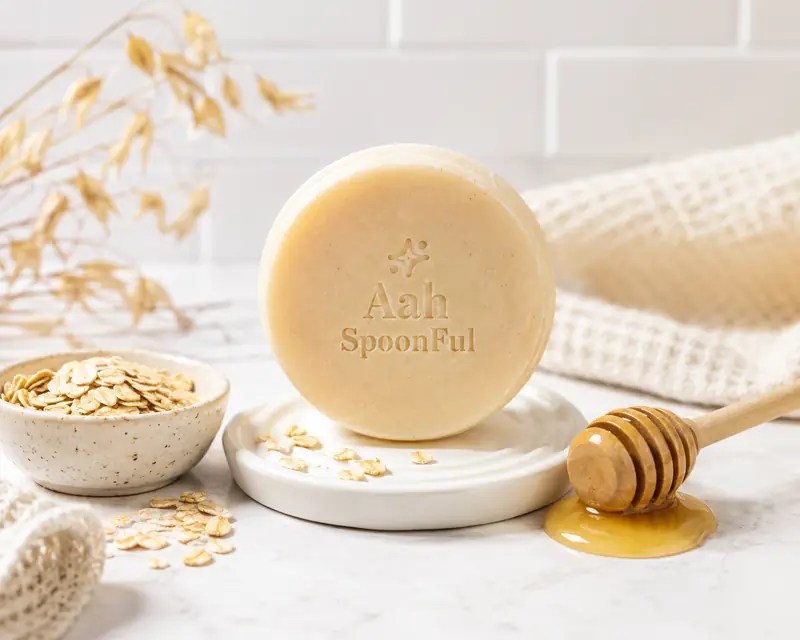
Most commercial "soap" bars aren't soap at all. They're synthetic detergent bars (syndets). Here's why it matters for your skin health.
Quick Takeaway
True soap is made from oils + lye through saponification. Commercial "soap" bars are often synthetic detergents that can strip your skin's natural oils and disrupt your skin barrier. Knowing the difference can transform your skin health.
What is Real Soap?
True soap is the result of a chemical reaction called saponification: fats/oils + lye (sodium hydroxide for bars, potassium hydroxide for liquid) → soap + glycerin.
Key properties of real soap:
- Natural process used for thousands of years
- Retains glycerin, a powerful humectant that draws moisture to skin
- pH around 9-10 (slightly alkaline, which your skin can handle)
- Biodegradable and environmentally friendly
When you see ingredients like "olive oil," "coconut oil," "shea butter," and "sodium hydroxide" (or "saponified oils"), you're looking at real soap. The lye is completely consumed during saponification, and there's no lye left in the finished product.
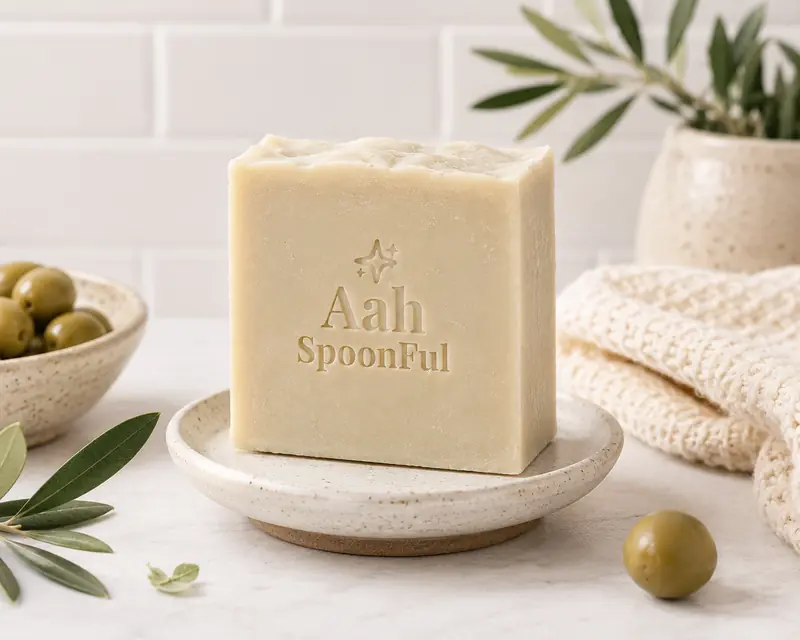
A classic Castile bar: saponified plant oils with the glycerin left right where it belongs.
What are Detergent Bars?
Synthetic detergent bars (syndets) are lab-made surfactants designed to mimic soap but with different chemistry.
Common issues with detergent bars:
- Often formulated to strip away glycerin (sold separately for profit)
- Can contain harsh sulfates (SLS, SLES) that over-cleanse
- May include synthetic fragrances, parabens, and triclosan
- Optimized for shelf stability and foam, not skin health
- Can be petroleum-derived rather than plant/animal fat-based
The term "soap" on packaging is actually regulated by the FDA. Many products avoid it by calling themselves "beauty bars," "cleansing bars," or simply "body wash bars."
Why Your Skin Barrier Prefers Real Soap
Your skin barrier (stratum corneum) is a delicate ecosystem of:
- Natural oils (sebum)
- Ceramides (lipid molecules)
- Beneficial microbiome
- Dead skin cells that form a protective layer
Detergent bars can disrupt this balance. Here is the disruption cascade:
- Over-stripping natural oils. Causes dryness, tightness, and that "squeaky clean" feeling (which isn't actually good).
- Disrupting pH balance. Weakens barrier function, making skin more vulnerable to irritants.
- Triggering sensitivity. Especially problematic for eczema, psoriasis, rosacea, or reactive skin.
- Damaging the microbiome. Kills both harmful and beneficial bacteria, reducing skin resilience.
Real cold-process soap, on the other hand, works with your skin:
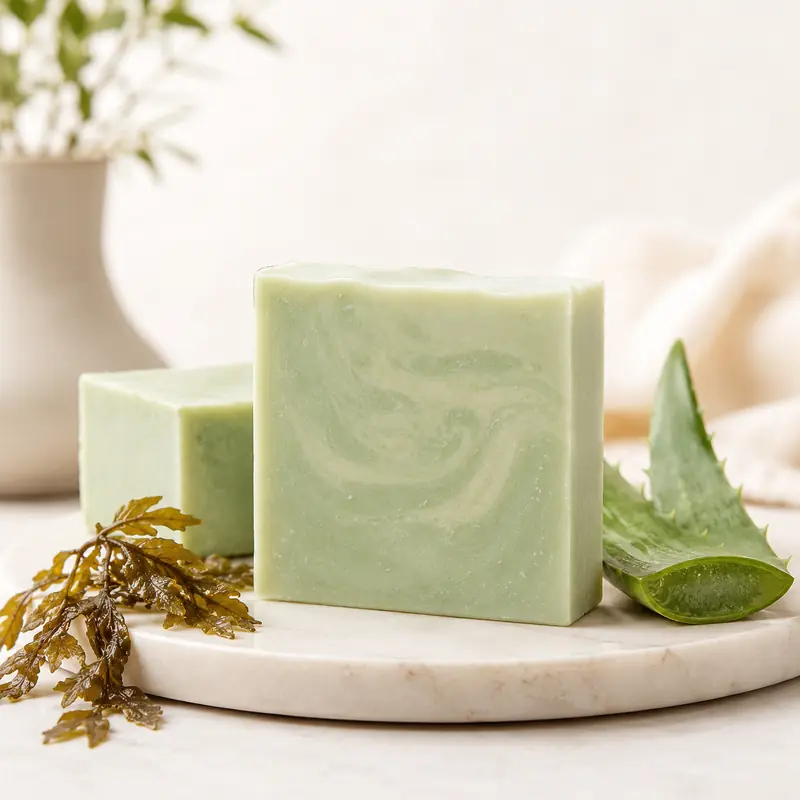
Plant oils, aloe, and sea botanicals: ingredients your skin barrier recognizes and works with.
- Superfatted. Extra oils left unsaponified (typically 5-8%) provide moisturizing benefits.
- Keeps glycerin. A natural byproduct of saponification that acts as a powerful humectant.
- Natural ingredients. Plant-based oils and butters your skin recognizes and can work with.
- Minimal additives. No need for synthetic preservatives or stabilizers.
How to Spot the Difference
Reading labels is key. Here's what to look for:
Real soap ingredients
- Olive oil, coconut oil, palm oil
- Shea butter, cocoa butter
- Sodium hydroxide (or "saponified oils")
- Essential oils or natural fragrances
- Clays, botanicals, oatmeal
- Glycerin (listed explicitly)
Detergent bar ingredients
- Sodium lauryl sulfate (SLS)
- Sodium laureth sulfate (SLES)
- Sodium cocoyl isethionate
- Synthetic fragrance
- Parabens (methylparaben, propylparaben)
- Triclosan (antibacterial agent)
- Terms like "cleansing bar" instead of "soap"
Pro tip: the "soap" test. If the product doesn't say "soap" on the label, it's likely a detergent bar. The FDA requires products to meet specific composition standards to use the term "soap." Many manufacturers avoid this by using alternative terminology.
The Cure Time Factor
One major difference between real soap and detergent bars is production time.
Cold-process soap needs 4-6 weeks to cure. During this time:
- Water evaporates, creating a harder, longer-lasting bar
- pH mellows from ~12 to ~9-10 as saponification completes
- Excess lye neutralizes, ensuring safety and mildness
- Bar becomes milder as the chemical process fully stabilizes
Syndets, by contrast, can be manufactured and shipped within hours or days. This speed and efficiency is great for manufacturers' bottom lines but doesn't allow for the same chemical maturation that makes cold-process soap so gentle.
Want to learn more about cure time? We have a detailed guide explaining the science behind the 4-6 week curing process and why it creates superior bars. Read: Why Cold-Process Soap Takes 4-6 Weeks →
What About pH?
You might have heard that soap is "too alkaline" for skin. Let's unpack this:
- Skin's natural pH: ~4.5-5.5 (slightly acidic)
- Real soap pH: ~9-10 (alkaline)
- Syndet pH: Can be formulated to ~5.5 (matches skin)
So syndets win on pH, right? Not necessarily. Here's the pH paradox:
- Your skin can handle alkaline pH temporarily. The brief exposure during washing doesn't permanently alter your skin's acid mantle. It bounces back within 30-60 minutes.
- pH isn't the only factor. A pH-matched syndet that strips your oils is worse than a slightly alkaline soap that leaves them intact.
- Alkalinity aids cleansing. Soap's slightly higher pH helps break down dirt and oils effectively without harsh detergents.
Think of it this way: your stomach acid has a pH of ~2 (very acidic), but you don't avoid eating. Your body has systems to handle pH variations, including on your skin.
Skin Conditions & Soap Choice
If you have specific skin concerns, choosing the right cleanser is even more critical:
Eczema / atopic dermatitis Choose: gentle, superfatted soap with oatmeal or shea butter. Avoid fragrances and exfoliants. Avoid: SLS/SLES-based syndets, antibacterial soaps with triclosan.
Acne-prone skin Choose: soap with tea tree oil, activated charcoal, or clay. Look for non-comedogenic oils. Avoid: heavy butters, overly moisturizing formulas that may clog pores.
Dry / mature skin Choose: high superfat soaps (8-10%) with shea, cocoa butter, and glycerin. Avoid: harsh detergents, anything that leaves your skin feeling tight.
Sensitive / reactive skin Choose: fragrance-free or lightly scented with single essential oils. Minimal ingredients. Avoid: synthetic fragrances, dyes, preservatives, exfoliants.
Environmental Impact
Beyond skin health, there's an environmental angle:
- Biodegradability: Real soap breaks down naturally in water. Many synthetic detergents persist in waterways and can harm aquatic ecosystems.
- Packaging: Handmade soaps often use minimal, recyclable packaging vs. plastic bottles for liquid syndets.
- Production: Cold-process soapmaking requires no external heat and minimal energy vs. industrial detergent manufacturing.
- Ingredients: Plant-based oils are renewable; petroleum-based surfactants are not.
Making the Switch
If you've been using detergent bars for years, here's what to expect when switching to real soap:
Week 1: Your skin might feel different, less "squeaky," maybe slightly oily. This is normal as your skin rebalances its natural oil production.
Week 2-3: Dryness and tightness should decrease. You might notice you need less lotion post-shower.
Week 4+: Skin feels softer, more resilient. Irritation, redness, or flaking should improve. Your skin barrier is healing.
Tips for success
- Give it at least 2-4 weeks before judging results
- Use a soap dish that drains well to extend bar life
- Don't expect the same foam as syndets (less foam ≠ less clean)
- Consider using a washcloth or loofah to generate lather
- Store bars in a dry place between uses
Bottom Line
If you have sensitive, dry, or reactive skin, or you simply care about ingredient transparency and environmental impact, switching from detergent bars to real soap can be transformative.
Look for transparent ingredient lists, makers who take pride in the craft, and products that respect the ancient art of saponification.
Your skin barrier will thank you.
Explore more
- Ingredient Glossary: look up any oil, clay, or scent used in soapmaking.
- Build Your Custom Loaf: design a full loaf (~10 bars) tailored to your skin's unique needs.
- Contact us with questions about the science behind natural soap.
Keep exploring
More guides, an ingredient glossary, and a 2-minute skin quiz await in the Education Hub.